
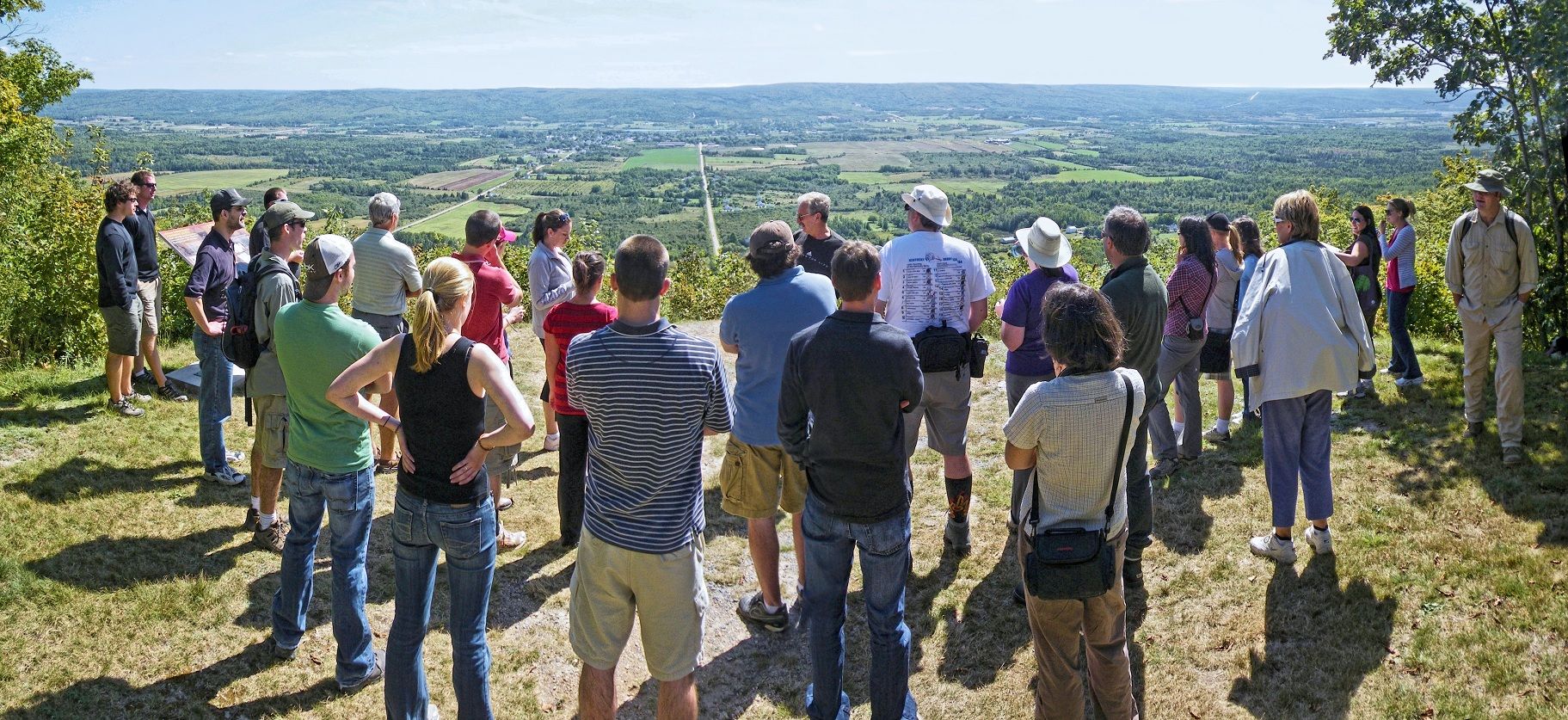

The Nova Scotia Community College’s Centre of Geographic Sciences (COGS) provides a focused approach to geomatics training and has earned a strong reputation among employers and geomatics professionals for the quality of their practical-learning programs. Small class sizes provide opportunities for one-on-one interaction and support. Learners use the most up-to-date equipment and software and get the hands-on training that makes COGS graduates the preferred choice of employers. COGS offers the following programs:
Geographic Sciences is a two-year diploma program that provides the foundation needed to start a successful career in geographic sciences. Students are introduced to a wide range of leading-edge geomatics tools and technologies, then pursue more in-depth study in one of the geographic sciences concentrations – GIS, Remote Sensing, Planning, or Cartography.
The Geographic Sciences Advanced diploma is an intensive, one-year, post-graduate level program designed to develop a sophisticated set of tools for working in the field of geographic sciences. Initially, students explore tools and technology that support the geographic sciences, and how each of the individual disciplines – GIS, Remote Sensing, GIS for Business, GIS Programming – fits into that process. This exploration is followed by intense study in a discipline of the student’s choosing, culminating in a major real-world project provided by the local GIS community. Graduates of the Advanced program are qualified to work as GIS Analysts, Spatial Database Managers, Market Analysts, GIS Developers, and GIS Researchers.
COGS is closely associated with the NSCC’s Applied Geomatics Research Group (AGRG), a team of Research Scientists, Research Associates, and graduate students who use Geomatics technologies to explore environmental and social issues. The AGRG team includes acknowledged leaders in educating new researchers in an exciting, growing field. University graduates or young scientists can further their education through industry internships, practicums, workshops and a Masters in Applied Geomatics degree jointly offered by NSCC and Acadia University. In the two-year MScAG program, students develop and refine their skills in the assembly, analysis, interpretation, and presentation of biological, geological or environmental data by working closely with researchers at both AGRG and Acadia.
In addition, COGS offers high-quality programs in the fields of Surveying and Marine Geomatics.
COGS is also home to the Walter K. Morrison Special Collection of cartographic books and maps. Walter received a Master’s Degree in Geography from Clark University in 1952, then worked as a professional cartographer with the National Geographic Society. In 1966 he joined the Nova Scotia Land Survey Institute (later, COGS). Throughout his career, and following his retirement in 1985, Walter added to his significant collection of antique maps and books related to the cartographic evolution of Nova Scotia. On his passing in 2011 the entirety of the collection was left to the College. It is a mixed media print collection of historical maps, atlases, periodicals and books that is unique in the Province in terms of its focus on the early mapping of Nova Scotia.
COGS Blog:
Read articles submitted by COGS ECCE student associates about their experiences studying and participating in the ECCE.